Trail running asks more of your ankles, legs, balance and eyes than road running. Training triple flexion, triple extension, ankle stability, gait changes and depth perception can help you run trails with more control and a lower risk of injury.
Do you want to improve your trail running? Our exercise physiologists take you through 5 simple exercises and strategies to help you perform well when conquering the trails.
Triple Flexion
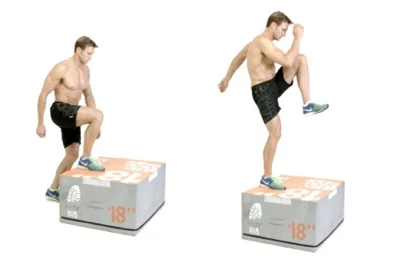
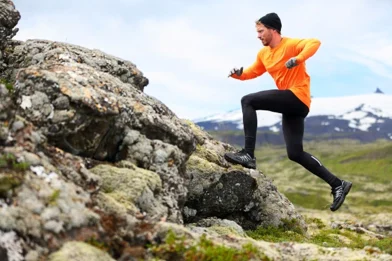
Learn and become strong in a position of triple flexion through ankle, knee and hip (this is when your hip is up, knee is bent and your toes are facing up). This will help with stepping and running up inclines and improve stretching and joint mobility. A great example is a step with high knee. This will help with improving your ability with running up inclines as the picture depicts.
Triple Extension
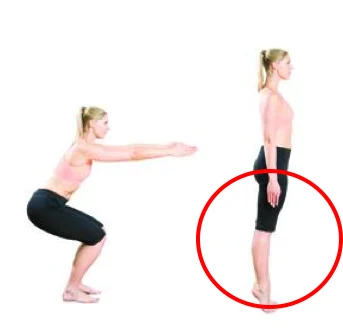
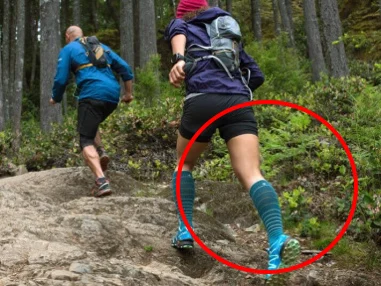
Learn and become strong in a position of triple extension through ankle, knee and hip (this is the typical ‘sprinters’ position where the leg is behind the body, the knee is straight and you’re up on the balls of your feet). This will help with a powerful, more efficient running stride. This should be trained with both legs together like a squat to calf raise and single leg variations like a single leg hop.
Ankle Stability
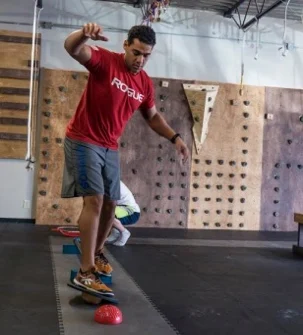
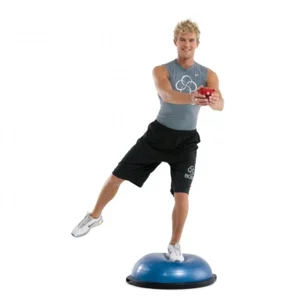
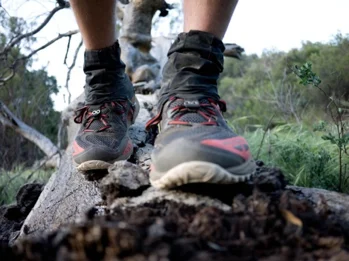
Practise rolling your ankle. Yep, challenging your ankle movement, balance and stability as much as possible helps to improve your awareness and ankle robustness. This is called ‘proprioception’ and is very important for reducing the risk of ankle injuries. Let’s face it, during a trail your ankle will roll a lot. This doesn’t mean rolling your ankle to the point of injury, but your foot will be wobbling around your shoe, sliding over loose gravel, twisting and turning and holding on to rock edges and maybe even having to stabilise and grip into soft sand. Hence, the need to get the muscles and joint receptors ready for this. If you have rolled your ankle before, our ankle sprain page explains how physiotherapy can help. If you have rolled your ankle before, our ankle sprain page explains how physiotherapy can help. Practise balancing on single leg, tandem walking, beam walking and use exercise to facilitate unstable surfaces such as foam mat or bosu ball.
Master Your Gait
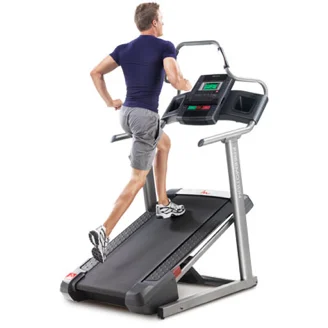
Can you mid foot strike? How about heel strike? Can you lengthen or shorten your stride and adjust accordingly to fast open flat track, rock gardens, undulating inclines, slippery surfaces, sharp declines, corners and everything in-between. This is a major point of difference compared to traditional road running where you quickly gain a good stride and try to maintain it; whereas off the beaten track your gait constantly changes. Practise different running patterns at 6-12% incline on a treadmill and also sense how your stride becomes quicker when tackling tricky declines.
Light, Vision and Depth Perception
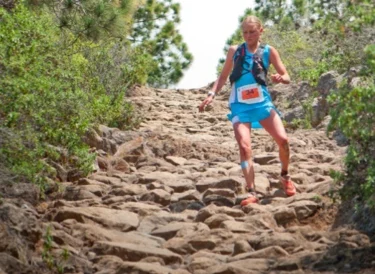
As we know, there are vast differences between road running and trails. One of these is the terrain, but also light. Yep bright light from the sun or poor light from an afternoon or night run. The changes in light can affect our vision and is a very common occurrence in trail running; to do part of the track in deep covered forestry then immediately do some open track with the sun beaming down several times through the run. Therefore, your eyes need to constantly adjust to light sources. We also need to have adequate depth perception to be able to step, jump, run and balance along the trail without falling or tripping. A classic example is someone who wants to gain some momentum running down a rocky slope at speed, stepping and jumping from one rock to another. We need very sensitive depth perception as to judge and determine how far the rock is away from our foot. Most trail runners have misjudged a step at some point and slipped, fallen or been jolted back. We can practise all of this by setting up an obstacle course with balance equipment, practise hitting tricky terrain, completing a few evening runs or night runs with head torch and practise running in and out of darker areas to get your eyes used to adjusting.
If niggles are getting in the way of your training, read more about running injuries and how our team can help.
If niggles are getting in the way of your training, read more about running injuries and how our team can help.