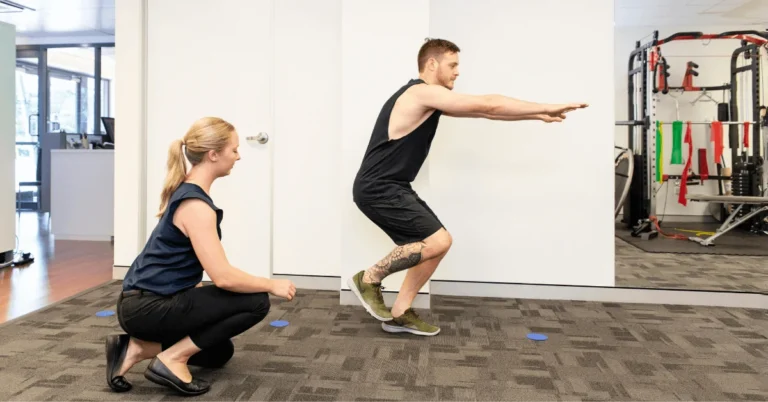
Proximal hamstring tendinopathy is irritation of the hamstring tendon where it attaches to your sitting bone, causing deep pain high in the back of the thigh. It often responds well to a physiotherapy program of load management and progressive strengthening.
Are you experiencing pain in the upper part of the back of your thigh? Is it affecting your ability to run, sit, squat, lunge, and walk uphill? Maybe you can no longer deadlift or even simply lean forwards.
Proximal hamstring tendinopathy is one potential cause for limitations in these activities. It is often described as a well localised pain where the hamstring attaches (think of the sitting bones that contact the chair when you sit upright) and is aggravated by compressive activities such as sitting or running uphill. You may find that the pain increases the day after an aggravating activity and causes early morning stiffness.
Does this sound like your pain?
It is important to have an assessment with your treating health professional to rule out other possible causes of upper thigh pain, as this area of the body is quite complex. However, if it is confirmed that you do have proximal hamstring tendinopathy, what can you expect?
Proximal hamstring tendinopathy behaves in a similar way to Achilles tendinopathy in that it tends to move through different stages. Symptoms you may experience will vary depending on which stage your tendinopathy is at. As mentioned above, activities or postures that compress the tendon attachment are the most likely to contribute to flare ups in pain, such as sitting or activities that involve deep hip flexion. Examples of these are bringing your knee up towards your chest, squatting or leaning over your bed to change the sheets. It can also be influenced by the following:
Training load and type:
- Higher speed running (sprints, intervals, sudden changes in pacing)
- Hill running
- High volume
- High frequency
- Type of training
General aggravating activities:
- Running style
- Work and lifestyle habits
- Prolonged sitting
- Stress
- Sleep position
- Reduced strength, control or flexibility
There are many risk factors that can contribute to the development of proximal hamstring tendinopathy, such as age, hormonal changes, and rapid increases in tendon load through sport or daily activities. This can include:
- Rapid increases in training volume or intensity
- Excessive hill work
- Training that is too heavily focused on high intensity sessions
- Returning to sport after a break
- Starting new exercises
How can physiotherapy help?
If you identify with any of the above, we suggest you take time to discuss this with your physiotherapist, as they will help you work out the right treatment and management approach for you. This may include:
- Temporary changes to activities that aggravate your pain, to allow any reactive symptoms to settle
- Progressive strength and conditioning exercises to help build your tendon’s capacity to tolerate load. The stronger your tendon is, the better it is likely to tolerate changes in your training.
- Correcting any training load errors, which is also important to help lower the risk of future injury or a flare up of your proximal hamstring tendinopathy.
Your physio will give you the tools to help you safely return to your chosen activity, such as running, weightlifting or everyday activities. Runners can also read more about common running injuries and how our sports physiotherapists can help.
Please note: the above exercise and information is general in nature. We recommend seeking individual advice before starting any new exercises.