A physiotherapist assesses and diagnoses injuries and pain and treats them with hands-on care, exercise and other techniques, while an exercise physiologist uses tailored exercise to help you manage health conditions, recover and get fitter. If your pain is new, start with a physiotherapist; for ongoing conditions or building fitness, an exercise physiologist is a good fit, and many people see both.
What exactly is the difference between an exercise physiologist and a physiotherapist, and which one should you see?
Plenty of our clients come in with this question, and they’re both great options depending on what you need. Read this blog to find out who is the right fit for you.
What is exercise physiology?
The aim of exercise physiology is to support clients to optimise their health and to prevent and manage disease or injury via exercise-based interventions.
Exercise physiologists must have an accredited degree in exercise physiology to practise, and are required to undergo continued professional development to maintain their skills and knowledge.
How can an exercise physiologist help me?
An exercise physiologist knows just how important exercise is for the human body. We all know that exercise is an essential component of our health, but we might not be aware of just how incredible the benefits of exercise are when performed correctly.
Did you know that exercise can reduce the risk of type 2 diabetes, and help you manage it if you already have it? An exercise physiologist can support you to manage a range of chronic health conditions such as diabetes, as well as provide preventative care to reduce the risk of disease. They can also support you to improve your performance in sport and exercise.
An exercise physiologist can:
- Help you manage diagnosed conditions through exercise
- Provide you with education about healthy movement and exercise
- Devise individualised exercise plans
- Support you to stay motivated and confident
- Advise on lifestyle modifications
- Suggest mobility aids and other medical devices that can assist you to exercise
How is an exercise physiologist different from a physiotherapist?
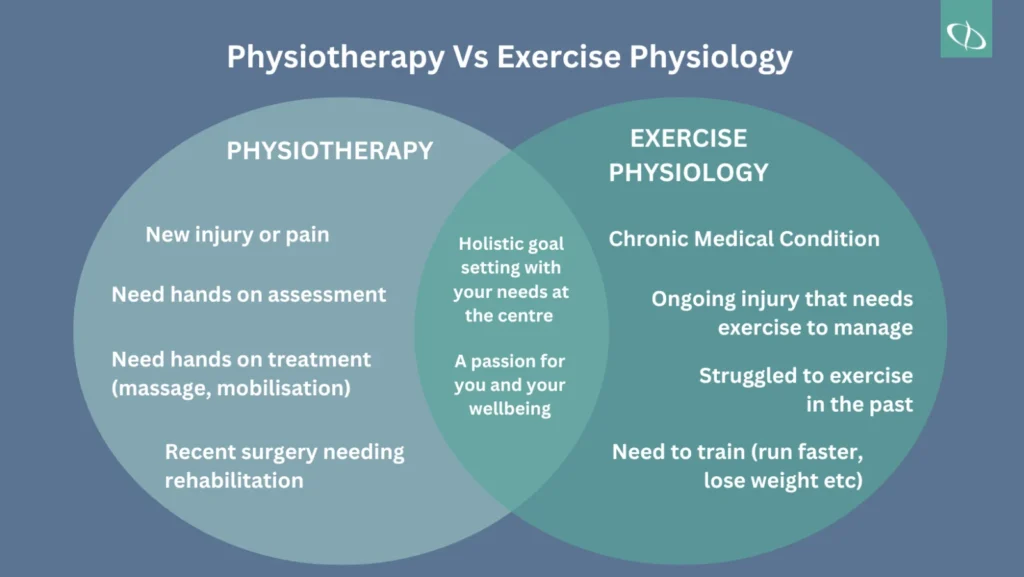
A physiotherapist can also help you to optimise your health and manage your health conditions. However, a physiotherapist will approach treatment with a broader scope. They are able to assess and diagnose several conditions and support your health with a wider range of approaches, including hands-on treatment, and they can refer you for imaging such as X-rays when it is needed.
Typically, a physiotherapist will provide a diagnosis, while an exercise physiologist will often work with clients after their diagnosis has been received.
Physiotherapists will place a greater focus on the management of disability, pain and conditions.
A physiotherapist can:
- Provide pain management such as a TENS machine or dry needling
- Provide soft tissue mobilisation or massage
- Devise exercise programs for strength and conditioning
- Assist with complex rehabilitation, such as rehabilitating from surgery
- Provide health and lifestyle advice
Exercise physiology and physiotherapy are complementary allied health disciplines, and many clients see both healthcare professionals. That is why we offer both services at Physionorth, so our clients have a wide range of support to help them reach their goals.
Benefits of exercise physiology
An exercise physiologist uses exercise-based strategies to improve your health.
Regular exercise, such as at least 30 minutes on most days, with support from an exercise physiologist, can help:
- Lower the risk of some cancers
- Lower blood pressure
- Lower cholesterol
- Support rehabilitation after injury or illness
- Improve mood
- Manage your weight and improve metabolism
- Reduce the risk of falls and fall-related injuries
- Reduce the risk of osteoporosis by strengthening bones and muscles (we also run osteoporosis classes)
- Reduce the risk of sports injuries by strengthening and conditioning joints and muscles
An exercise physiologist can provide you with advice and assistance to exercise in ways that keep pain and discomfort from existing medical conditions or injuries to a minimum.
Through their knowledge and skills, they can support you to overcome your challenges and reclaim the joy of movement. This is a good reason to see an exercise physiologist, rather than attempting an exercise plan on your own, where you might unknowingly make things worse by not exercising safely.
Benefits of physiotherapy
A physiotherapist may be able to help you:
- Diagnose and treat a range of conditions
- Manage back, pelvic and other muscle and joint pain during and after pregnancy (see our pregnancy care)
- Reduce your risk of injury
- Have check-ups to see how you are moving and functioning
- Get long-term support and advice to help you manage health conditions or injuries
- Recover with a rehabilitation program
- Manage pain with techniques such as massage and dry needling
- Understand your condition with education and support
How exercise physiology can help manage conditions
While physiotherapists often do the diagnosing of medical conditions, an exercise physiologist is a great choice for support in managing your condition.
Exercise physiology can support common medical conditions, including:
Asthma
Exercising can be challenging with asthma, because it may induce asthmatic symptoms in people with the condition. This can make it hard for people living with asthma to reach their daily recommended amount of exercise. However, exercise improves aerobic fitness, meaning that the body uses oxygen more efficiently, which may reduce the chance of an asthma flare-up during exercise.
An exercise physiologist can support people with asthma to exercise effectively, aiming to reduce the chance of increasing symptoms while supporting people to feel the benefits of exercise.
Diabetes
Diabetes is a complex illness, and there are multiple different types of diabetes. Exercise is particularly important for type 2 diabetes. Exercising regularly is more complicated with diabetes, but offers a range of positive benefits such as weight loss, improving the body’s use of insulin, lowering the risk of heart disease, and decreasing stress.
It’s recommended by Diabetes Australia that people with diabetes consult a healthcare professional before increasing exercise with diabetes.
Arthritis
The symptoms of arthritis, such as pain and swelling, make it hard to exercise. We’re used to staying still when we are in pain, but exercise can actually help to manage the symptoms of arthritis.
Even though we know that regular exercise can improve balance, sleep and mood as well as easing pain and stiffness, it can be difficult for people with arthritis to tackle exercise on their own. An exercise physiologist can provide assistance and a tailored exercise plan that supports people with arthritis to manage pain and work around the joints that flare up the most.
Do I need an exercise physiologist or physiotherapist?
Generally, a physiotherapist provides a diagnosis, more ‘hands-on’ treatment, and covers a broader range of treatment approaches, while an exercise physiologist narrows down on exercise-focused interventions and management of conditions.
So if the pain you are experiencing is new and unusual, we suggest seeing a physiotherapist for assessment. For ongoing management of a chronic condition or for support optimising your fitness, an exercise physiologist is a great choice.
How Physionorth can help
Here at Physionorth we are proud to offer physiotherapy and exercise physiology services, with an emphasis on holistic, motivating and evidence-based care.
We love to provide our clients with the opportunity to overcome their challenges and enjoy the benefits of movement. Our team aims to understand what is driving your symptoms, rather than just treating them. We love helping our clients enjoy life by improving their health and feeling the benefits of movement.
We offer functional exercise classes in a small group setting, and before your first class you book a 30-minute class assessment ($50), so we can put you in the right group.
*All information is general in nature and is not intended to be a substitute for professional medical advice. Physionorth can consult with you to confirm if this advice is right for you.