If you’re a singer or professional voice user you will understand how important it is to warm up your vocal cords before you start practising. There are also a large number of neck and facial muscles that play an important role in a healthy voice. Gentle stretches and self-massage for your jaw, neck and upper back can help these muscles stay relaxed so you can breathe and sing more freely. I’ve included pictures in this guide. If you’d like a video demonstrating any of these exercises, please scroll to the bottom of the post, where I’ve included a video demonstration.
Jaw muscles
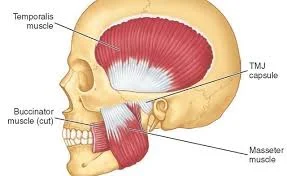
The masseters and pterygoids are two muscles around the jaw and if these guys get tight, they affect your ability to open your mouth wide, protrude your jaw and move your jaw side to side. You can locate your masseters by placing your fingers just in front of your ear and sliding them down under your cheek bone. The ‘meaty’ muscle that runs from your cheek bone to your lower jaw (or mandible) is your masseter. You can feel your pterygoids if you pop your thumb on the inside of your cheek and aim it up towards your cheek bone.
How do you keep these muscles relaxed and ready for training?
Gentle massage is a great way to release your masseters prior to singing or using your voice for long periods. Open your mouth and feel if there is any restriction. Starting at your tragus (your mid ear), slide your fingers down along your cheek bone until you feel a muscle. You can massage in either circular motions or glide your fingers from your cheek bone down towards your mandible. Do this for 1-2 minutes. After you’ve finished try opening your mouth again. It may feel easier! Make sure you do both sides!
Neck muscles
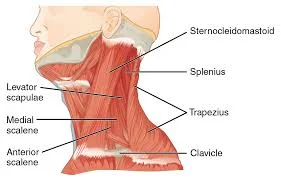
There are a lot of neck muscles that can pull on your face, jaw and skull and add tension around your voice box (larynx), affecting your ability to lift your head and open your mouth. The upper trapezius, scalenes, sternocleidomastoid and levator scapulae are the main culprits here. Try the stretches below to loosen these guys up. Hold each stretch gently for 30 to 60 seconds to help those muscles relax.

Sternocleidomastoid stretch. Tilt your head to the side, rotate your chin away from that shoulder then extend your head backwards. You should feel a gentle stretch from your collar bone, up to the base of your chin.
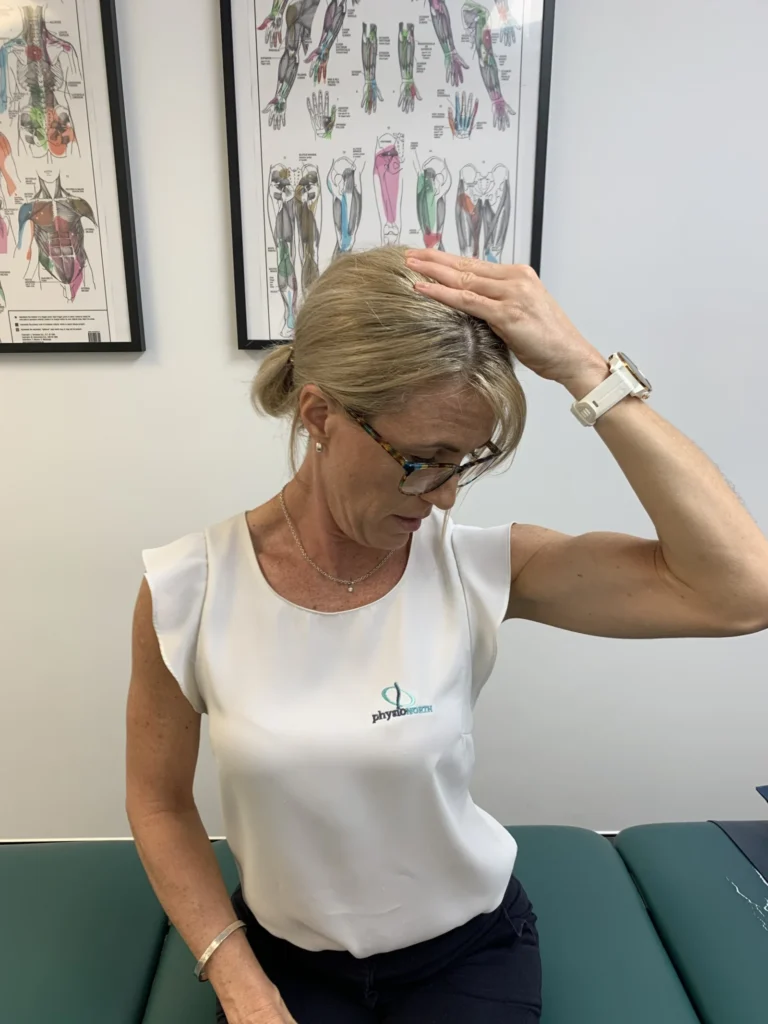
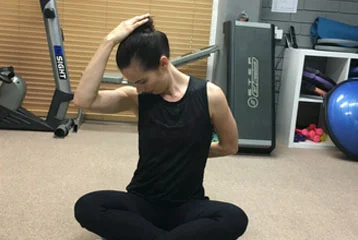
Levator scapulae stretch. Look into your opposite armpit and use your hand on the top of your head to gently intensify the stretch.

Massage to your sternocleidomastoid (SCM) muscle. If you feel like your SCM muscle is still tight, despite the stretch, you can release it using gentle massage. This muscle runs from the back of your jaw, diagonally towards where your collar bone inserts at the front of your chest. Use your thumb and index finger to grip this muscle and gently squeeze it on any tender points. Hold for 10-20sec, then release. Then move down the muscle slightly until you find another tender spot and repeat. Repeat 3-4 times down the length of the muscle. You only need very gentle pressure for this one! Avoid pressing on the pulse at the front of your neck.

Upper trapezius stretch. Tilt your ear towards your shoulder to stretch the muscles down the side of your neck. You can use your hand on the top of your head to gently intensify this stretch.
Chest and upper back muscles
The breath and breathing control is an extremely important part of projecting your voice and maintaining voice health. There are lots of muscles like your intercostals (the muscles between your ribs that assist you to breathe), pecs and your scalenes that will prevent you from taking a deep breath if they are tight. Try these exercises as part of your warm up to keep your upper back and rib cage moving freely.
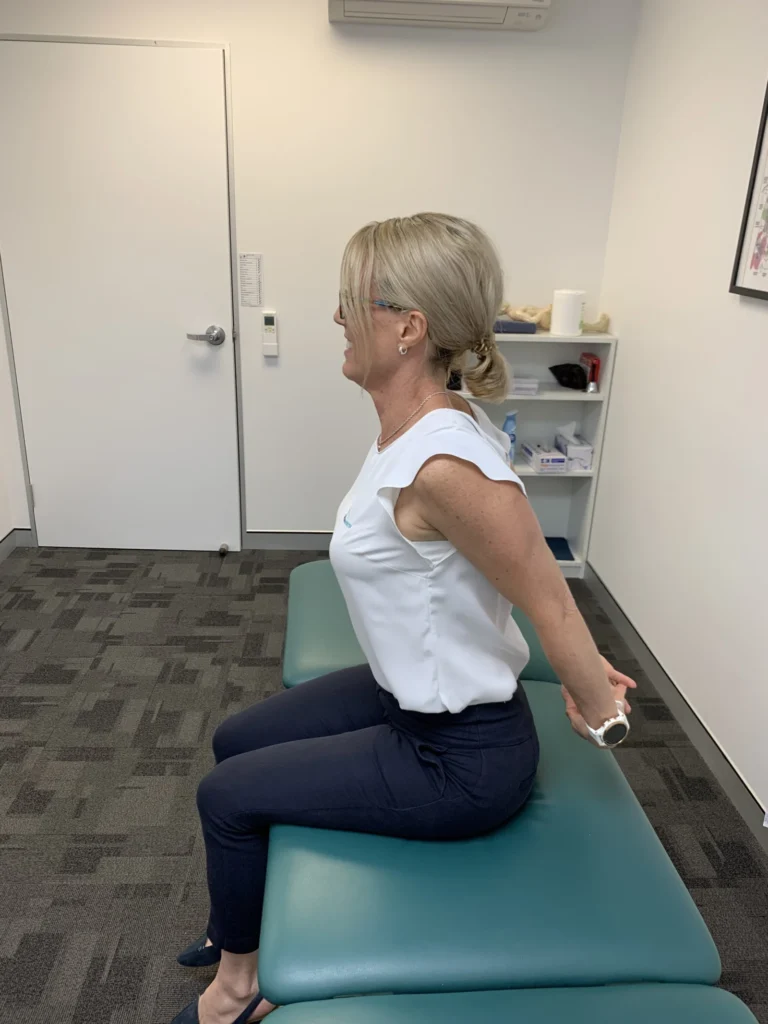
Chest stretch. Clasp your hands behind your back and gently push your chest outwards. If you are flexible enough you can gently raise your hands towards the roof for a deeper stretch.
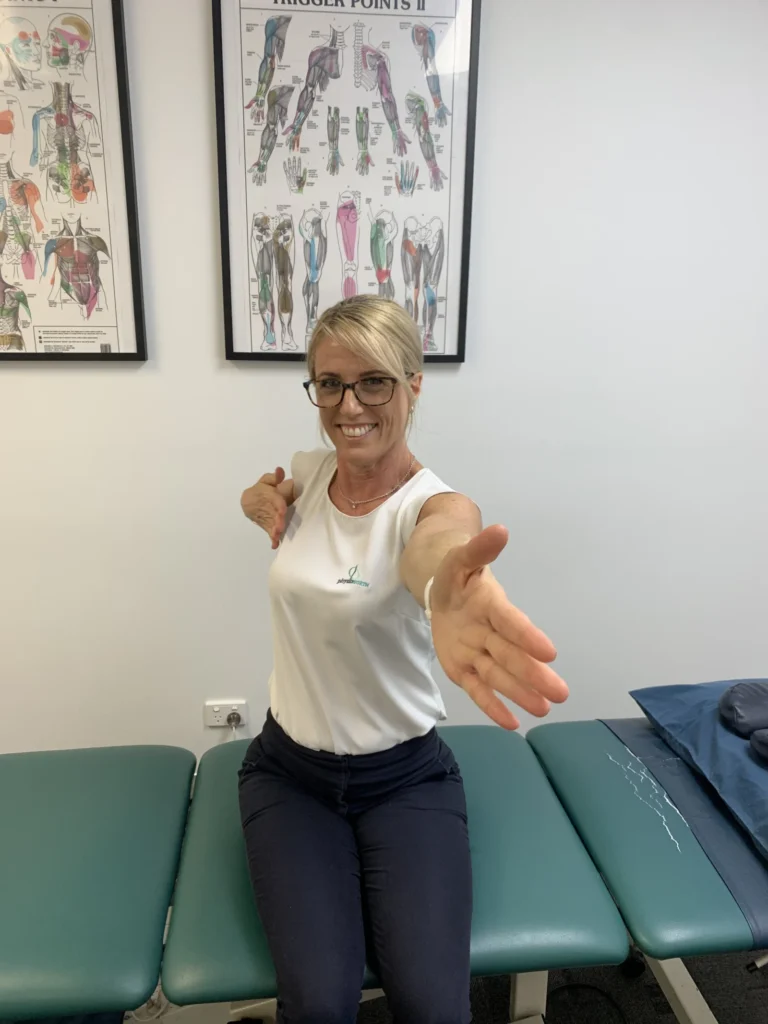
Bow and arrow. This is a great active stretch for restoring movement in the upper back and freeing up a lot of muscles at once. Start with both arms straight and hands together in front of you (at shoulder height). Take a deep breath in as you bend one elbow and rotate your upper body to the same side. Breathe out as you return to the start position. Repeat to the other side.
A healthy musculoskeletal system is an important part of your voice practice. Add 5 minutes of these stretches to your training routine. Many singers find their voice feels freer, and it can help lower your risk of neck and jaw problems down the track.
If you have ongoing neck pain or headaches or jaw pain that gets in the way of your singing, our physiotherapists can assess you and tailor a program for your voice work.