Most people with low back pain do not need an X-ray, MRI, CT or ultrasound. Scans often show normal age-related changes that don’t explain your pain, and they are usually only needed when there are warning signs of a more serious problem.
On a daily basis I have patients come into the clinic with low back pain. Many patients have heard horror stories about someone else who has back pain and are often worried that their back is permanently damaged beyond repair.
Often they come with scans that they have been referred for (usually an X-ray, MRI or CT). In many cases these scans will show findings such as disc bulges/protrusions, end plate narrowing, osteophytes (bony spurs), degeneration, and in some cases fusion of joints. All of these things sound extremely scary! But the truth is that in most cases these findings don’t explain your pain.
The facts
Research consistently shows that in most cases the cause of a person’s low back pain cannot be pinned on the changes shown on a scan. This is known as non-specific back pain. In fact, findings such as disc protrusions, facet degeneration, end plate narrowing and osteophytes are a normal part of the ageing process. Research has shown that scans taken on people with no low back pain or history of low back pain also show these findings. Therefore, there is a large portion of the population walking around with disc protrusions and degeneration in their backs and they have no pain!
This means that in most cases, a scan will not change the management of your low back pain.
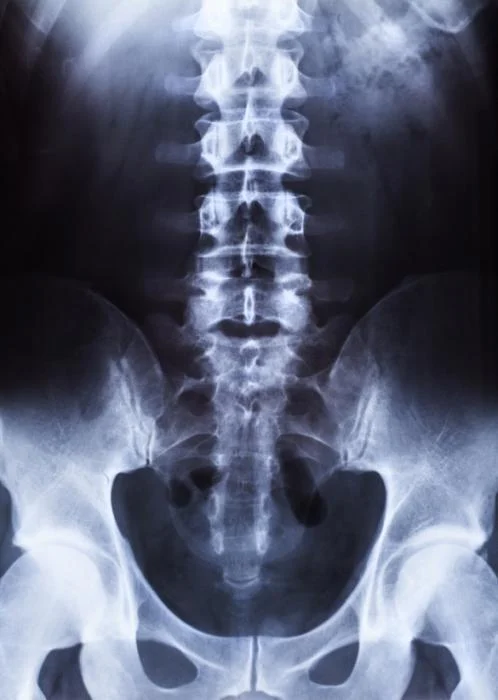
So what causes the pain?
There are many structures in the back that can potentially cause low back pain. In my experience it is often overactivity of big muscle groups, muscle strains and ligament injury that cause pain. Often there is muscle spasm and tightness around a sore joint, which can add to the pain. Irritation in an area can also affect nearby nerves, which can refer pain into the groin, buttock and leg (sciatica).
Are scans useful?
There is a group of patients for whom scans are useful. These are people whose pain is not improving as expected over several weeks, or who have warning signs such as increasing muscle weakness, foot drop, reduced reflexes, or a history of cancer, fever or significant trauma. In these cases scans play an important role in diagnosis and referral to a specialist may be required.
If you have back pain with new changes to your bladder or bowel control, or numbness or pins and needles around your groin, genitals or bottom (the “saddle” area), go to an emergency department straight away. These signs need urgent medical care.
The good news
Most low back pain improves with time, staying active and the right advice, and physiotherapy can help. Gentle movement is better than bed rest, and many people with a new episode of low back pain improve within a few weeks. Following your treatment plan and keeping up your strengthening exercises can help lower your risk of future flare-ups. The good news is that you have a lot of control over your recovery.
If you would like help with your back, our team can assess you and put together a plan to get you moving more comfortably.