Low back hinging is when most of a backbend comes from one small section of the lower spine instead of the whole spine sharing the movement. Dancers, gymnasts and cheerleaders should avoid it because that overloaded section can become painful and, over time, may develop a stress fracture.
Why it matters for dancers, gymnasts and cheerleaders
Lower back pain is a fairly common complaint we see from the dancer and gymnast population. Many skills in these sports need large amounts of lumbar spine extension (lower back arching). Bridges, walkovers and handsprings are just a handful of these skills, and they are often performed again and again in a training session.
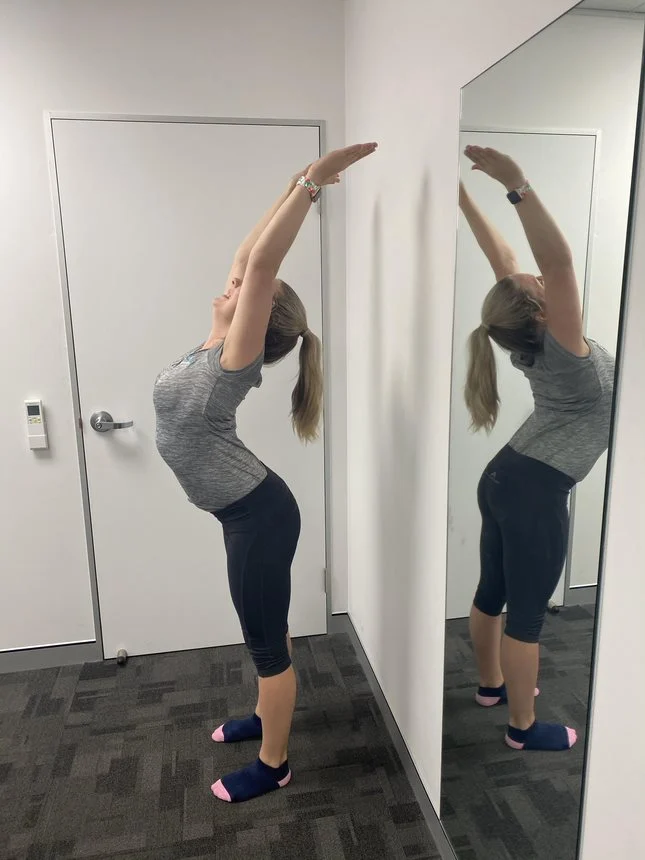
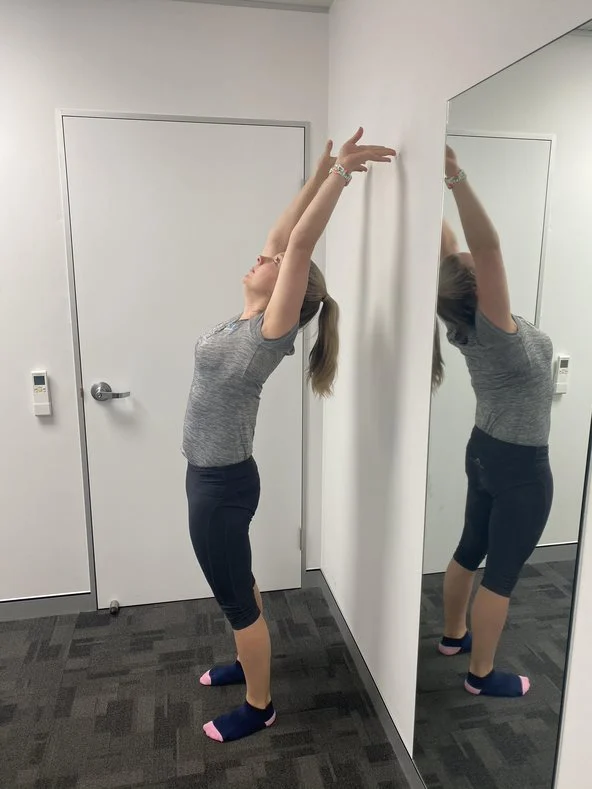
Lumbar hinging is a common cause of lower back pain in dancers and can be seen in the picture below. A lot of the arching movement is coming from one portion of the spine instead of the whole spine working together. Because it is overworking, this segment of the spine can become quite painful if left untreated, especially under the load of repeated acrobatics and tumbling.
What causes lumbar hinging?
Hinging can lead to localised pain in your low back, referred pain down your legs and, if left untreated, stress fractures in the spine. It is usually linked to:
- Technique that needs refining
- Lack of abdominal strength
- Lack of spinal stability
Try this exercise
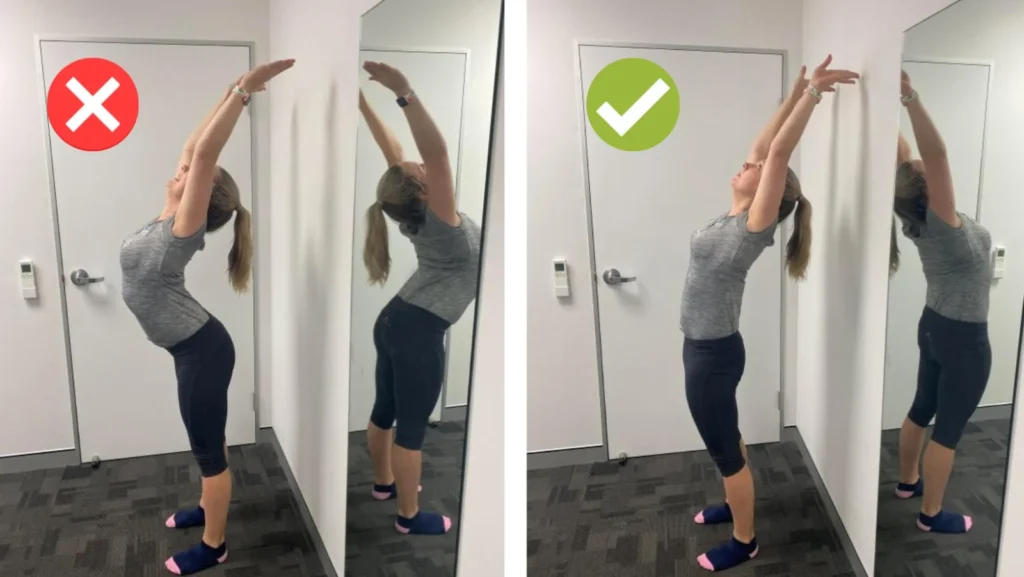
If this sounds like something you do, try this. Stand with your back facing the wall and your arms by your ears. Arch your hands back towards the wall, and picture your whole spine working together with your shoulders and your hips. Get your coach or a friend to watch you from the side. They should see a nice even “C-shape”. Done properly, this exercise should not cause you any pain.
How can Physionorth help?
If you feel pain in your lower back with arching movements, see a physiotherapist early. Left untreated, the pain can become more serious, and we want to help you avoid long periods off skill training. At Physionorth we look at your technique and assess your flexibility and strength. Your treatment and exercises are then based on your own results, so they target what you need.
Find out more about our physiotherapy for dancers and gymnasts.
*All information is general in nature and is not intended to be a substitute for professional medical advice. Physionorth can consult with you to confirm if this advice is right for you.