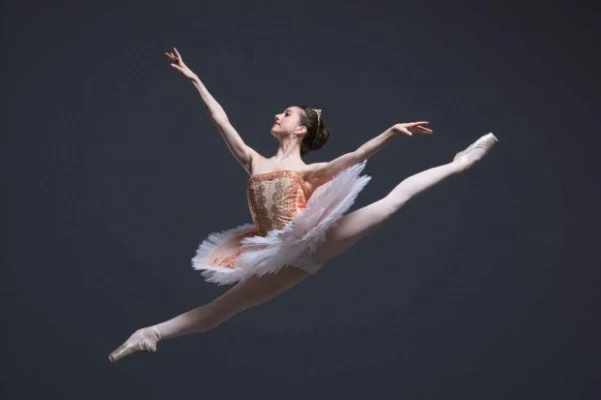
A dancer’s hip is required to go through extreme ranges of motion. To achieve this, the hip must have enough strength and control to reach these positions without discomfort or injury. These positions are also expected from a very young age, before the dancer is developmentally mature. Without enough control around the hip joint, a young dancer may be more at risk of injury later in life.
Common hip injuries in dancers
1. Snapping hip
This condition is very common in dancers and is often caused by tightness in the gluteal (bottom) muscles. Dancers often describe it as a moving or popping sensation in the hip. This sensation is actually one of the hip tendons shifting over the joint. In the early stages it is usually more irritating than painful, but if left untreated, it may become sore. Risk factors include reduced turnout, decreased single leg balance and decreased core or pelvic control.
2. Anterior impingement
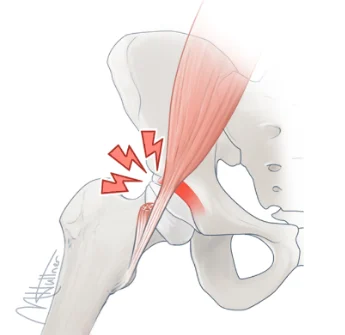
The sustained and frequent extreme hip positions required in dance can lead to compression within the hip joint. This is known as anterior hip impingement and is usually described as a sharp pain at the front of the hip. If left untreated, the irritation around the hip joint can worsen and lead to more pain. Risk factors include decreased stability around the hip and a lack of control of leg movements.
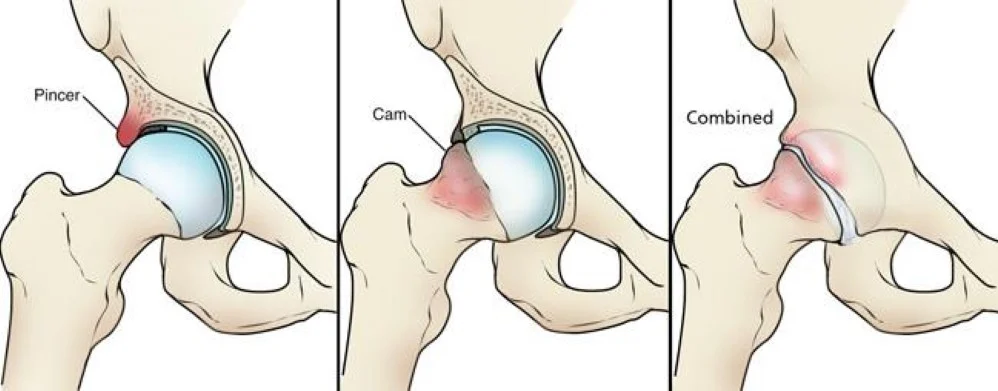
3. Bursitis
Bursitis is a very common hip condition seen in our clinic. Bursae are small fluid-filled sacs that reduce friction between tendons and joints all over the body. Poor strength, control or biomechanics around a joint can lead to an “overload” of the bursa, causing it to become inflamed and painful. With hip bursitis, dancers often describe pain on the outside of the hip. It is really important to address standing and dancing postures to reduce strain on the bursa.
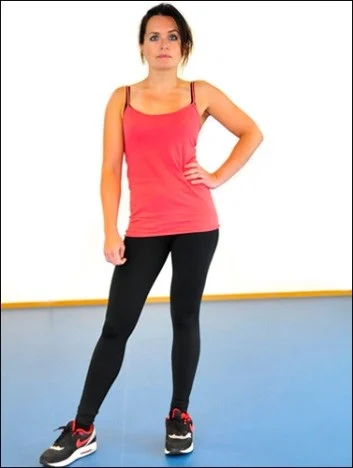
Incorrect Posture
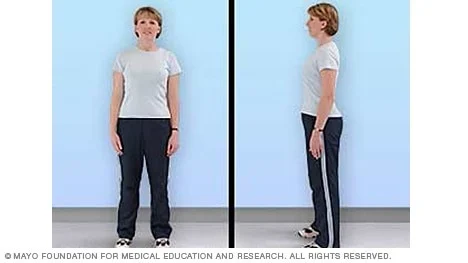
Correct Posture
The deep hip rotators and your turnout
Turnout should come mainly from the hip, not from forcing the knees and feet. The quadratus femoris is one of the small muscles deep in your hip that help you turn out. It is a rectangular muscle that runs from the ischial tuberosity (the sitting bone) to the femur (the large bone of the thigh).
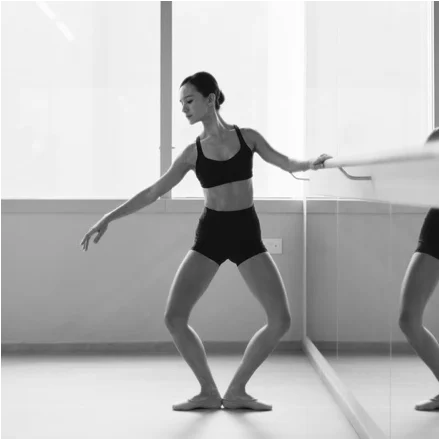
Its main job is to rotate the thigh out to the side, so it works hard to hold turnout on your standing leg. Improving the strength of this muscle can help your turnout and stop you relying on compensations, such as tilting the pelvis, that can lead to the injuries above. Before you try to warm up into your turnout, it can also help to check and release any pre-class tension.
Don’t forget the feet: flexor hallucis longus
Hip control and foot strength work together. Flexor hallucis longus (FHL) is a small but powerful muscle that sits deep in the back of the calf. Its tendon wraps behind the inside of the ankle and under the foot to attach to the big toe. Physios remember the structures that pass behind the inner ankle as “Tom, Dick and Harry”: tibialis posterior, flexor digitorum longus and flexor hallucis longus.
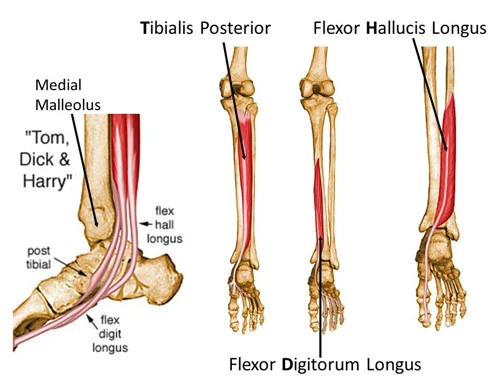
FHL gives the final push through the big toe when you walk, jump or rise onto demi-pointe and pointe. Dancers use it constantly, so it can become sore when it is overloaded. Two simple ways to strengthen it:
- Towel scrunches: place a towel on the floor in front of you and use your toes to drag it towards you while keeping your heel on the ground. Repeat for 15 seconds or until you feel tired.
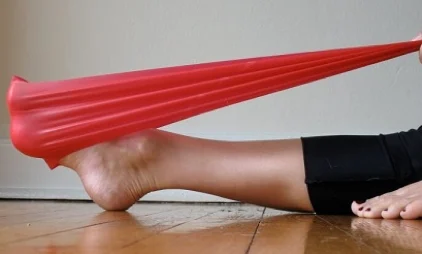
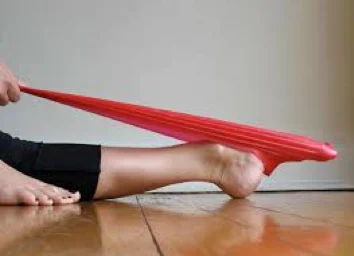
- Resisted pointing: push the foot down against a resistance band, then finish the movement by curling your toes, as shown below.
If you have any foot or ankle pain, check with your physiotherapist before starting these exercises.
How Physionorth can help
Looking after your hips early is much easier than recovering from an injury. Our physios can assess your hip range of motion, strength and control, check your turnout and give you a program to suit your body and your dance style. Find out more about our dance and gymnastics physiotherapy.
*All information is general in nature and is not intended to be a substitute for professional medical advice. Physionorth can consult with you to confirm if this advice is right for you.