Most of us will experience a headache at some point in our life. For some, it is a rare event that lasts only momentarily. For others, it can be a regular occurrence that can affect day-to-day function and quality of life.
Headaches can reduce your ability to concentrate, work and do the things you love to do. So how can you help prevent headaches in the first place?
1. Strengthen your back muscles
Prolonged sitting (usually at a computer) with poor posture (rounded shoulders, forward poking head, slumped lower back) is a common contributor to neck-related headaches. Your back muscles get fatigued from sitting for long periods, causing you to slump forward. Strengthening the muscles in your upper back can help prevent this.
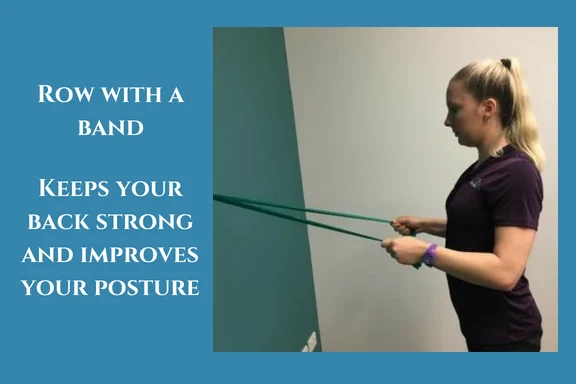
An easy exercise to incorporate into your day to day routine is a row with a band. To do this exercise, pop an elastic band around a pole at about chest height. Stand tall and hold onto the ends, then pull the band in towards your chest, squeezing your shoulder blades towards each other. Make sure your shoulders are relaxed down as you do this movement and that your neck is relaxed.
2. Consider a posture brace
If you have to sit for long periods, a posture brace can be a useful reminder to keep your back and neck in a good position.
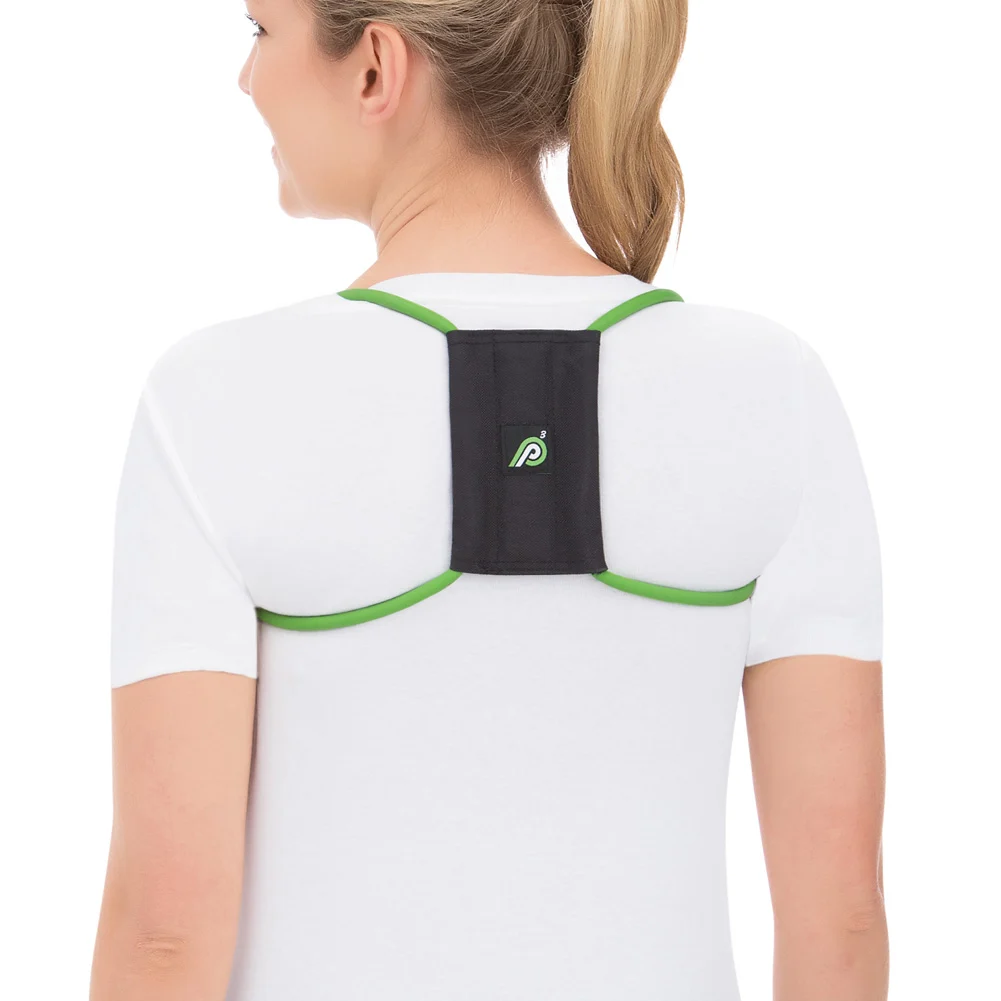
A slimline, comfortable brace is easiest to wear during the day. Ask your physiotherapist whether a brace suits you, and use it alongside strengthening exercises rather than instead of them.
3. Maintain good neck strength
Many people lack strength in little muscles in their upper neck called the deep neck flexors (DNF). These little guys keep your head in a nice upright position and prevent that poked chin posture that commonly causes headaches.
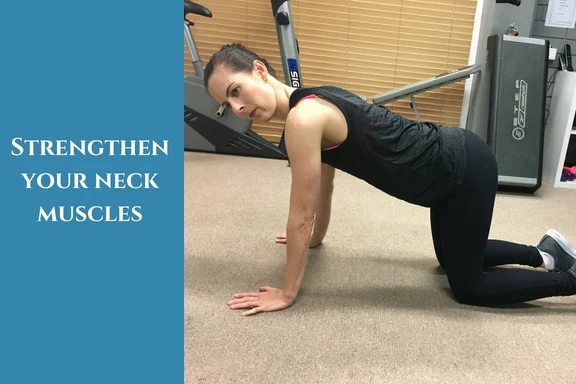
A nice way to strengthen the DNFs is to pop onto your hands and knees (ensuring your back is in a nice neutral position with a small curve in the low back). Then imagine your spine is a string and someone is pulling the string from the base of your skull, in a horizontal direction. At the same time tuck your chin in slightly. Maintain this position and slowly rotate your head from side to side 10 times. If you find this position too difficult, you can also perform this exercise by sitting down and leaning forwards, placing your elbows on a desk (then following the above instructions).
4. Maintain your upper back movement
There are quite a few muscles that connect your upper back to your neck. If these muscles get tight, they pull on the neck and can cause headaches. To prevent this happening, make sure you keep your upper back nice and loose.
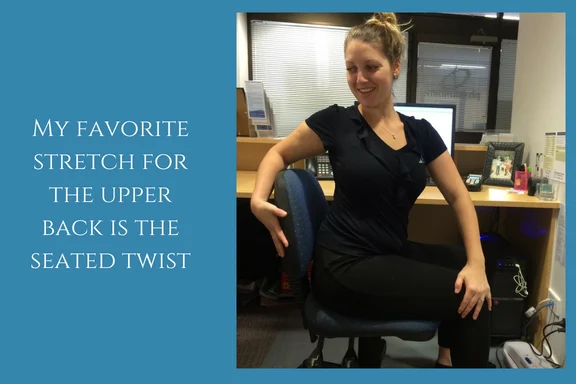
Start sitting nice and tall in your chair, then rotate around to one side as far as you can, using the back of the chair to twist you a little further. Stop when you feel a nice stretch in your upper back. Slowly return to face the front, then repeat to the other side.
5. Stretch your neck
Likewise, if your neck muscles are tight, it will compress your neck vertebrae and has the potential to cause headaches.
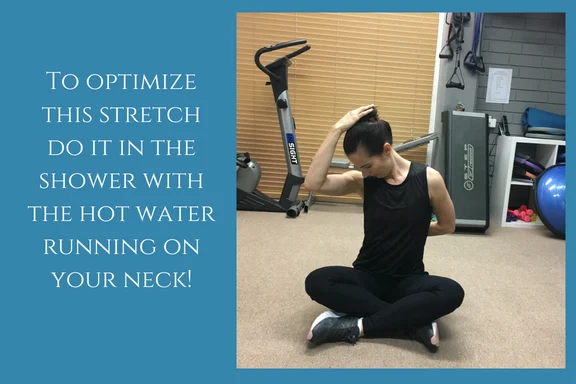
One of our favourite stretches for the neck is the levator scapulae stretch. To perform this stretch place one hand behind your back then turn your head so you’re looking into your opposite armpit. Hold onto the top of your head and gently press downwards if you want a more intense stretch.
6. Move
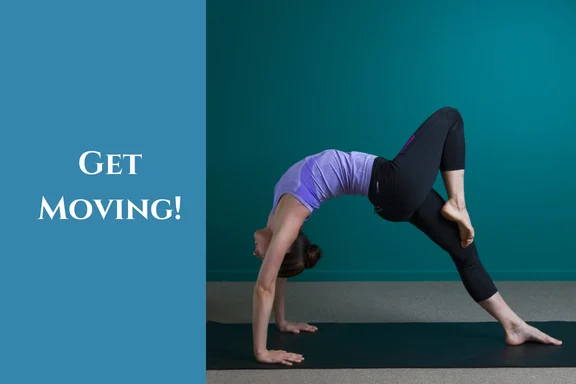
Walking, running, yoga and Pilates are all great ways to improve mobility and may help reduce neck pain and headaches. So find a form of exercise that you love (and will stick to), and get moving. Our small exercise classes are another option if you prefer some guidance.
7. Fidget
At the end of the day, our bodies weren’t designed to sit in one position for long periods of time. Changing position often through the day may help reduce neck and lower back pain. It’s also a great idea to get up and walk away from your desk as much as possible. Take regular breaks to stretch and unwind.
We hope you found this quick guide to headache prevention helpful. Please remember that regular headaches should not be accepted as part of normal everyday life. If headaches keep coming back, our physiotherapists can assess your neck and posture and help you with a plan. See your GP straight away if a headache is sudden and severe, or comes with other symptoms such as weakness, numbness, vision changes or fever.