
Have you ever caught sight of yourself in the mirror looking a little too much like the hunchback of Notre Dame? I think most of us are guilty of this! Me included.
The truth is our standing posture can change a lot throughout our day and even more over our lifespan. Postural dysfunctions are common and arise when our centre of mass is not aligned over our base of support (the feet!). This can place excessive strain on muscles, joints, ligaments and neural structures especially if we repetitively adopt poor posture or sustain it for long periods.
In the following pictures we have used a plumb line as a reference for the midline
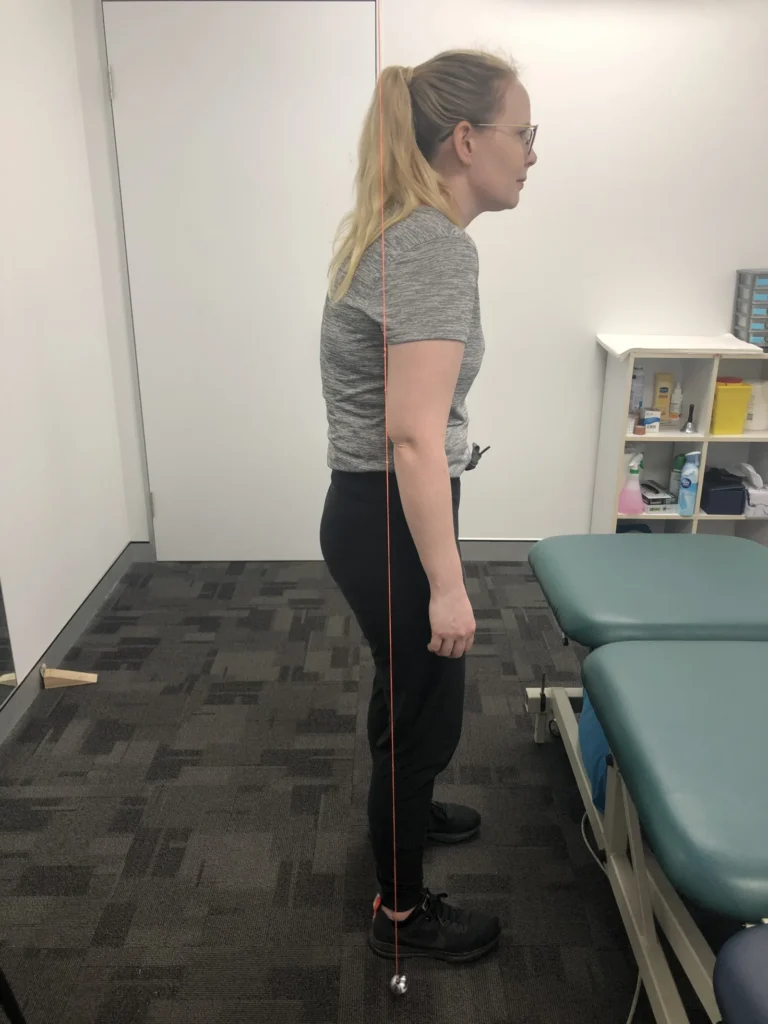
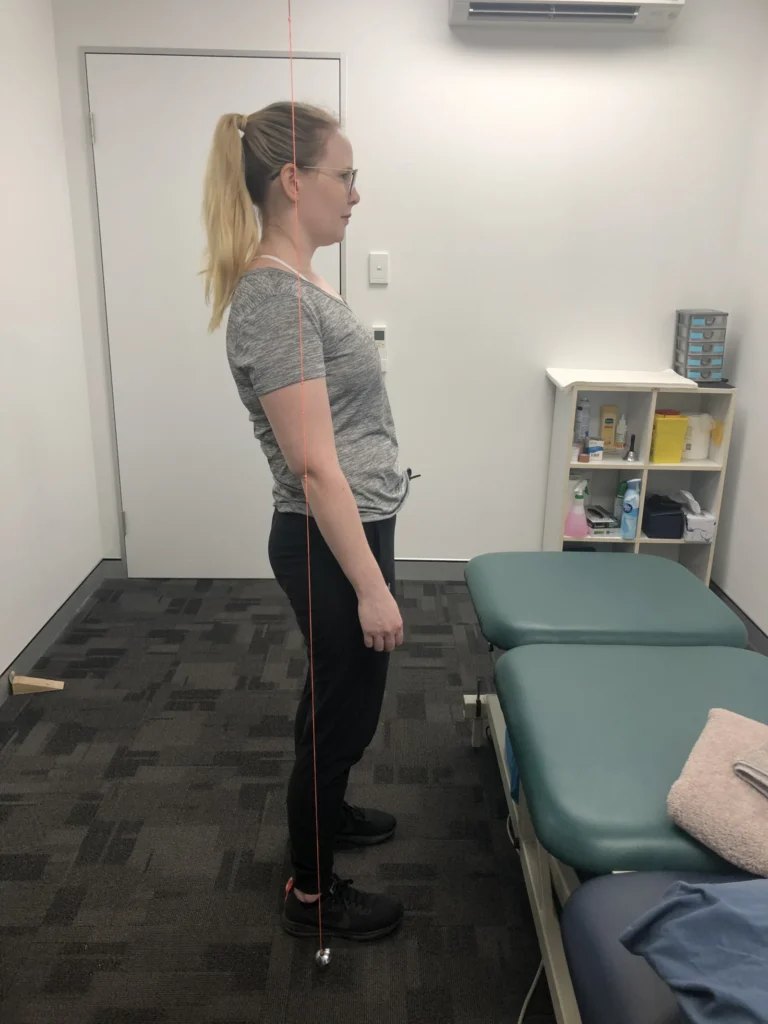
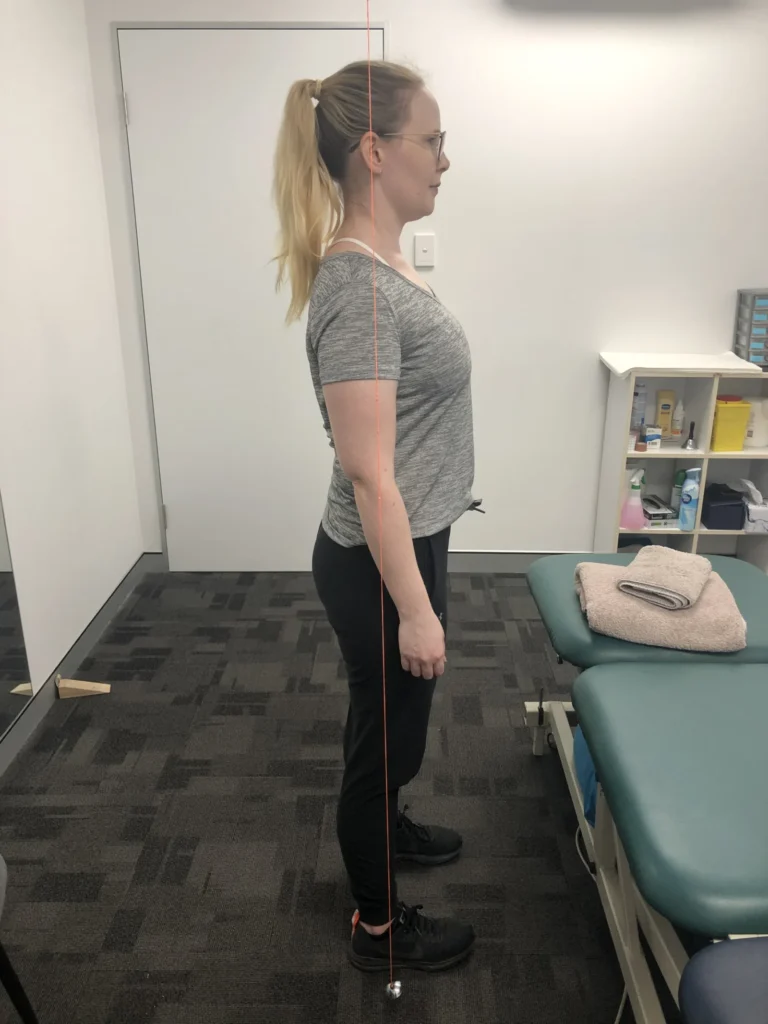
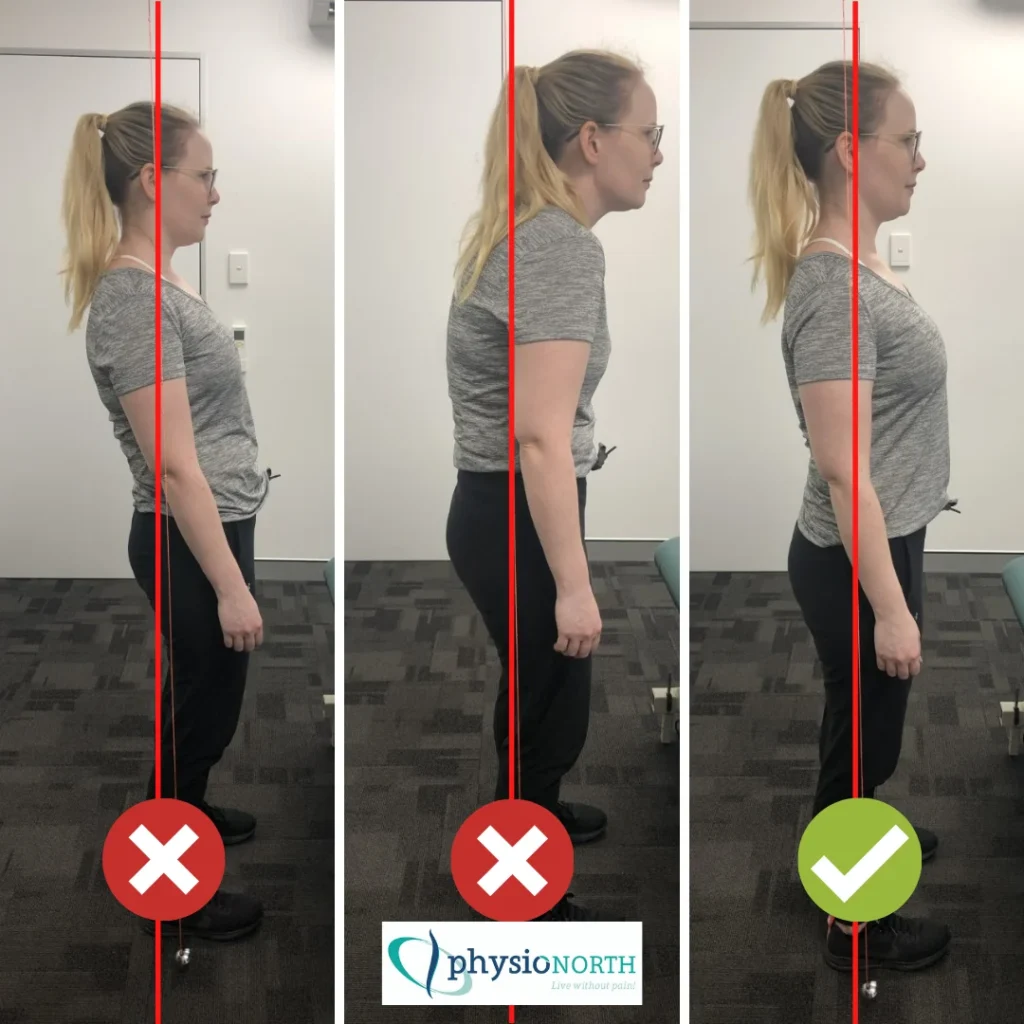
Ideally when standing side on to a plumb line the line should pass:
- Just in front of lateral malleolus (lateral ankle bone)
- Slightly anterior to mid aspect of knee
- Midway through greater trochanter (upper thigh bone)
- Midway through trunk
- Mid aspect of shoulder joint (AC joint)
- Through the earlobe
In the first picture we can see sway back posture.
- Hips too far forward
- Pelvis too anteriorly tilted
- Hinging through low back
- Trunk leant too far back
This type of posture can lead to many different types of pain but commonly it results in low back pain. People with sway back posture hinge through the low back making an exaggerated inward curve called a lumbar lordosis. Hip pain is also common in this population as the hips are too far forward. Generally, core/abdominal strengthening and hip control exercises are prescribed to help correct this posture.
In the second picture we can see kyphosis with forward head posture.
- Trunk leant forward
- Rounding through shoulder blades
- Head too far forward
This type of posture can lead to upper back and neck pain as the thoracic spine has an increased outward curve called a kyphosis. Headaches are also a common finding with this posture. Generally, this population needs upper back and neck strengthening exercises and mobility exercises for their thoracic spine.
In the third picture we can see neutral posture.
- Plumb line intersecting all appropriate points
- Elongated spine
Less likely to have postural dysfunctions. Full body strengthening and mobility exercises suggested to keep neutral posture.