
Father’s Day · $49 for a 60-minute remedial massage voucher · Ends 7 Sept Buy a voucher

Back pain

Sore, stiff, or catching when you bend? Most back pain settles well with the right plan, and you don't need a referral to get started.
About back pain

Back pain is one of the most common reasons people see us. About one in six Australians report back problems. It can come on after lifting, a long drive or gardening, or for no obvious reason at all, and it is common from your 40s onwards, not just in older age.

Most back pain is not caused by serious damage. Common causes include strained muscles or ligaments, stiff or irritated joints, disc problems that press on a nerve, and conditions such as arthritis, spinal stenosis or osteoporosis. Australian guidelines note that most back pain improves within about six weeks with the right plan.

Symptoms vary: aching muscles, sharp or burning pain, pain that spreads down the leg, or pain that gets worse when you bend, twist, lift, sit or walk.

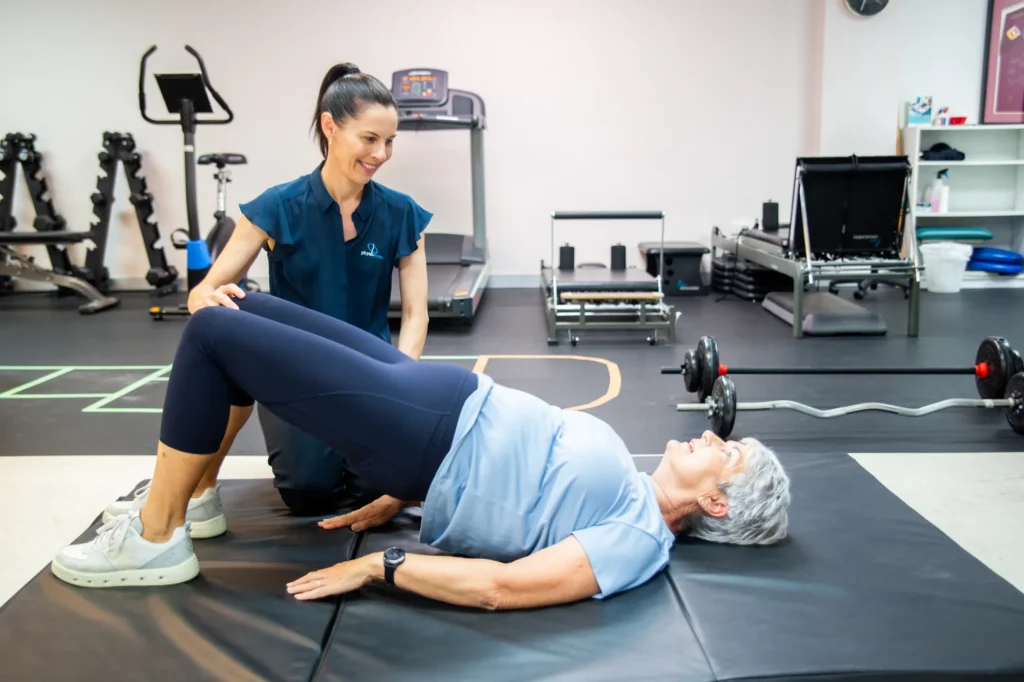
A physiotherapist guiding a patient through a bridging exercise on a mat
Getting a sore back moving again with a bridging exercise in the clinic gym.

Keep moving, carefully

Bed rest used to be the advice. It isn't any more. Gentle walking, changing position often and a few simple movements usually settle a sore back faster than lying still. Your physio will show you which movements are safe for you.

How we treat it

Your physiotherapist will listen to your story, watch how you move and examine your whole body. Often the area that hurts isn't the only problem. An old ankle injury, stiffness from sitting all day or the way you lift can all put extra load on your lower back.

Treatment may include:

  • hands-on treatment to ease stiff joints and tight muscles
  • retraining how you move, to take pressure off sore areas
  • exercises to strengthen the muscles that support your back
  • advice on posture, sleep and your work set-up
  • dry needling, taping or a brace, if they suit you

If your back pain is linked to another health condition, we work with your doctor. As you improve, Strength & Mobility classes are a good way to keep your back strong.

See a doctor straight away if

you have numbness or weakness in your legs, numbness around your bottom or groin, or trouble controlling your bladder or bowel. These can be signs of a rare but serious condition called cauda equina syndrome. Also see a doctor first if your pain started after a fall or accident, or you feel unwell with a fever.

Common questions

Should I rest or keep moving?

Keep moving, gently. Short walks and changing position often usually help more than lying down.

Do I need a scan?

Usually not. Scans rarely change the treatment for common back pain. Your physio will tell you if one is worth asking your GP about.

How soon can I be seen?

Usually within the week. Call reception if it is urgent.

Do I need a referral?

No. Private patients can book straight in.