Father’s Day · $49 for a 60-minute remedial massage voucher · Ends 7 Sept Buy a voucher

Hip pain

Assessment and treatment for sore, stiff or clicking hips, with exercises you can keep doing at home.

Why hips are tricky

The hip is a deep ball-and-socket joint with many layers of muscle, tendons and ligaments around it. It moves in many directions and is usually very stable, so when it hurts there is often more than one thing going on. A full assessment helps work out what is causing your pain and what will help.

Common causes of hip pain

Gluteal tendinopathy

Pain on the outside of the hip that comes on gradually, sometimes down the outer thigh (not below the knee). Often sore lying on that side. Usually settles with targeted strengthening and changing activity for a while.

Bursitis

Pain on the outer hip that can be strong at rest and spread into the thigh. It rarely happens on its own and is often linked with a tendon problem.

Hip impingement

A pinching or sharp pain in certain positions, such as deep squats. It can involve the bone shape or the soft tissues, and treatment depends on the type.

Groin and hip flexor strains

Pain in the muscles that lift the leg or bring it across the body. Common in sports like soccer, but can happen at any age.

Snapping hip

A click or clunk, usually at the front of the hip. It is not always painful, but can become sore if it happens often.

Hip osteoarthritis

Stiffness and aching in the groin or hip that builds over time. Exercise is one of the most helpful treatments. More on osteoarthritis.

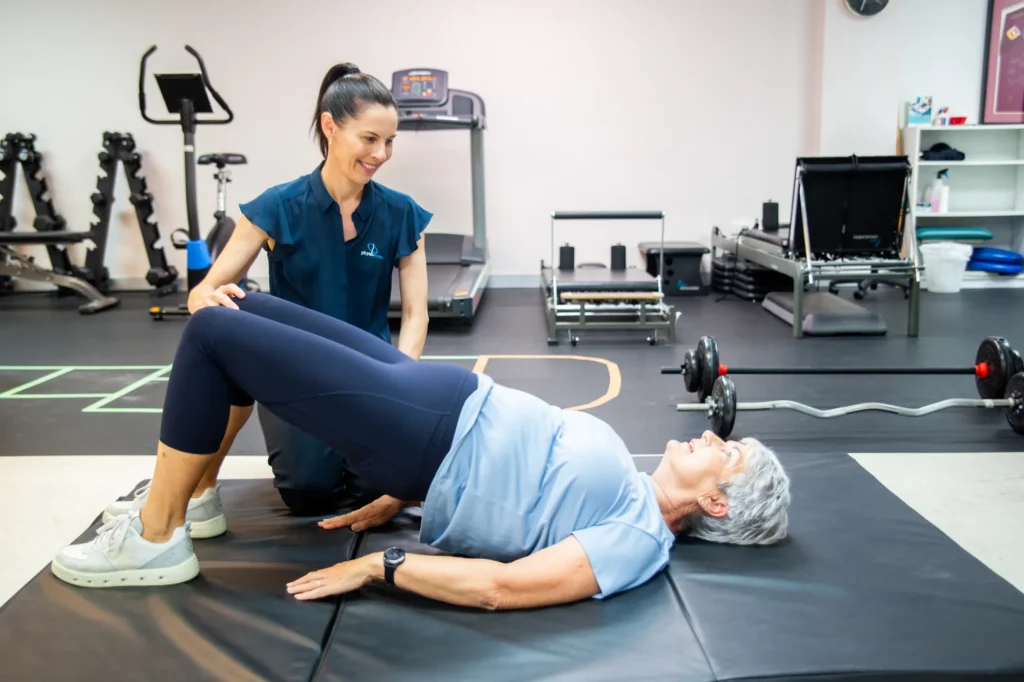
A physiotherapist guiding a patient through a bridging exercise on a mat
A physiotherapist guiding a bridging exercise to strengthen the hips and back.

How we treat hip pain

Your physiotherapist will look at your hip, back, knees and feet, and how you move as a whole. Treatment usually combines hands-on care, strengthening exercises and advice on activities that aggravate your hip, so you can keep moving while it settles.

Common questions

Should I stop exercising if my hip hurts?

Not usually. Changing what you do for a while is often better than stopping altogether. Your physio will help you work out what to keep and what to pause.

Can physio help hip arthritis?

Yes. Strengthening and staying active are recommended first-line treatments for hip osteoarthritis.

This information is general in nature and does not replace a personal assessment from a qualified health professional.