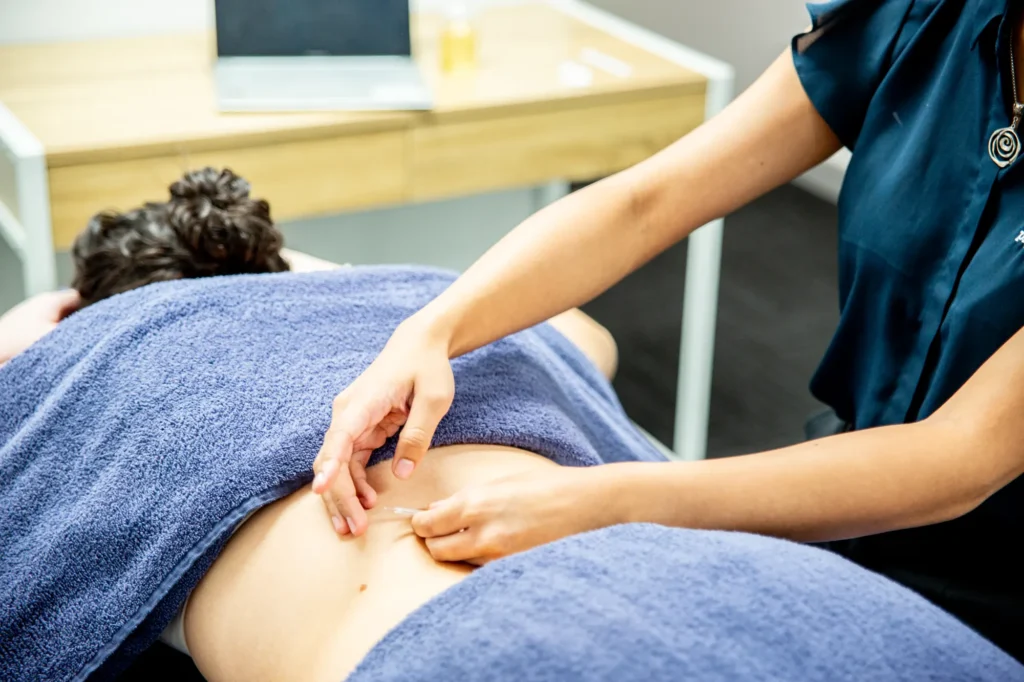
Dry needling during a physiotherapy appointment, using single-use sterile needles.
What is dry needling?
Dry needling uses very fine, single-use sterile needles placed into tight, tender spots in a muscle (often called trigger points or knots). The aim is to help the muscle relax, ease pain and improve movement.
It is used alongside hands-on treatment and exercise, not on its own. Your physiotherapist will only suggest it if your assessment shows it may help, and only if you are comfortable with it.
How is it different from acupuncture?
The needles look similar, but the thinking is different. Dry needling is based on Western anatomy and targets specific muscles. Acupuncture comes from Traditional Chinese Medicine and uses points along meridians.
What it may help with
muscle tension and tight, tender spots
muscle pain after an injury or overuse
some referred pain, for example from tight back or buttock muscles
stiffness that limits how you move
Is it safe?
Risks are low. The most common is mild soreness or a small bruise for a day or two. Your therapist will explain the risks before treatment and check whether it is suitable for you, for example if you are pregnant, take blood thinners or are afraid of needles. All our therapists who use dry needling have completed an Australian Physiotherapy Association (APA) approved course.
Common questions
Does it hurt?
Most people feel a small prick, then a dull ache or a twitch in the muscle. It settles quickly.
Can I have dry needling with massage?
Yes. Some of our massage therapists are also trained in dry needling and can include it in a remedial massage.
Is it covered by my health fund?
Dry needling is part of your physiotherapy or massage appointment, so it is claimed the same way.